

EQUIPMENT KNOWLEDGE / SELECTION
Telescopic Handler Purchasing Guide
A purchasing checklist covering operating needs, load and reach, configuration, budget, documentation and supplier evaluation.
Introduction
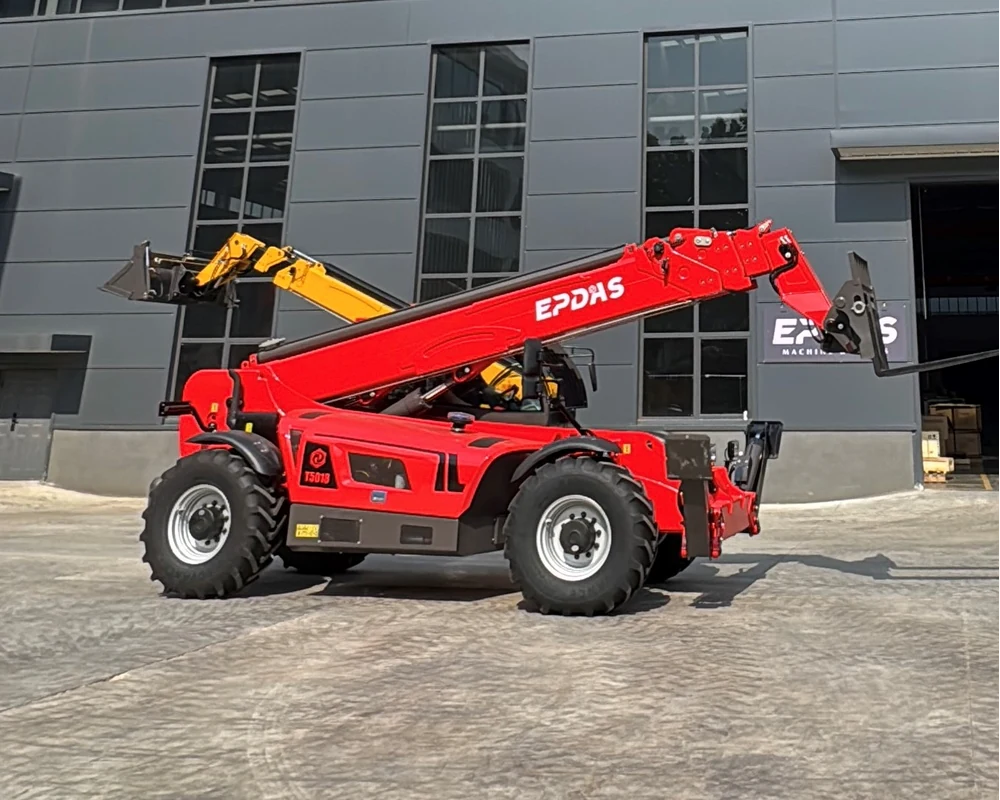
What is telescopic handler
It combines the functions of a forklift and a small crane, featuring a mechanical arm at the front that can extend, lift, and retract. This arm is capable of both forklift operations and lifting cargo higher and transporting it farther.
Market about telescopic handler
Pending confirmationMarket growth figures in the supplied draft are pending confirmation; no market growth percentage is asserted here.
Primary purpose
To help readers make rational purchasing decisions from an objective perspective, focusing on three core questions: Do I need to buy? How to buy the right product? How to determine whether the manufacturer is reliable?
Part I: Do you really need to buy a telescopic handler?
Evaluate your actual needs
Analysis of Working Scenarios: Judge whether your own working scenarios (construction, logistics, mining, agriculture, etc.) need the core capabilities of telescopic handler: long reach, high lifting height and multi-scenario adaptability.
Workload and usage frequency: if it is used more frequently (e.g., daily overhead stacking in logistics parks, long-term material transfer in construction sites), it is more cost-effective to purchase. While it is only used occasionally, leasing may be more appropriate.
Comparison of alternative equipment: Compared with forklifts, cranes, etc., is there a need for both “lifting height + horizontal reach” or the ability to work smoothly on uneven ground?
Cost-benefit analysis
Total Cost of Ownership (TCO): Includes purchase price, maintenance costs, fuel/electricity, spare parts and operator training.
Return on Investment (ROI): Estimate the payback period using your own operating data, expected efficiency and actual costs.
Leasing vs. purchasing: Compare the initial investment, expected utilization, rental charges and long-term ownership costs for your operation.
1.3 Objective Decision Criteria
Suggested acquisition: Consider purchase where use is frequent, the task cannot be met adequately by existing equipment and the return is supported by your own cost analysis.
Non-recommended acquisition: low frequency of use, limited budget, and rental can fully meet the demand without affecting operational efficiency
Part II: How to buy the right telescopic handler?
2.1 Define the core technical requirements
Rated load capacity: according to the heaviest materials to be handled to determine the rated load capacity (for example, 3.5 tons, 6 tons). Pay attention to one point: the longer the telescopic boom extends, the lower the load capacity. The purchase should be based on actual working conditions and load requirements. A model-specific operating load chart must be obtained for the intended configuration.
Lifting height and horizontal reach: Match the maximum lifting height (EPDAS up to 18 meters) and horizontal reach to the on-site working height and space.
Engine selection: Ask for the engine specification, destination emissions documentation, operating requirements and service arrangements for the actual offered configuration.
Size and maneuverability: Consider the size of the equipment and the minimum turning radius to ensure that it can move flexibly within the working space; prioritize models with four-wheel drive and multiple steering modes for complex terrain.
2.2 Consider practical configuration and adaptability
Attachment compatibility: choose the equipment that supports a variety of attachments (forks, buckets, drilling tools, aerial work platforms) to enhance versatility. At the same time, make sure attachments are compatible and load capacity meets operation needs.
Safety Configuration: Prioritize models equipped with overload control system, panoramic cab, emergency stop device and intelligent load control to ensure operational safety.
Comfort and operability: Consider cabs equipped with air-conditioning, adjustable seats and reverse monitor, along with automatic fork leveling to reduce operator fatigue.
Energy saving: Ask for fuel-consumption test conditions and configuration-specific evidence before comparing lifetime operating costs.
2.3 Scenario-based Selection Guidelines
Construction scenarios: prioritize telescopic handler with high load capacity, high lifting height, and fast after-sales service response.
Logistics and warehousing scenarios: focus on fuel economy, operational flexibility and stacking accuracy.
Mining/quarrying scenario: choose machines with wear-resistant parts and strong heavy-duty capacity.
Rental business scenarios: consider models with cost-effective, easy-to-maintain and reliability.
2.4 Budget allocation and cost control
Set a reasonable budget range: avoid blindly pursuing high specifications or low prices, and balance performance and cost.
Consider hidden costs: reserve budget for maintenance, spare parts and training to avoid subsequent financial pressure.
Compare quotes from multiple manufactures: focus on cost-effective rather than the lowest price, and consider after-sales service and parts supply when comparing quotations.
Part III: How to judge whether the manufacturer of telescopic handler is reliable?
3.1 Evaluate the strength of the manufacturer]
Basic qualification: verify whether the manufacturer has relevant certifications (CE, EAC, etc.) and complete production and testing equipment
R&D and production capacity: Review the actual production and testing facilities and ask for supporting information on core component suppliers.
Product range and market influence: Review the manufacturer’s actual product range and request evidence for its market presence and support arrangements.
3.2 Verify product quality and reputation
Product inspection report: require the manufacturer to provide authoritative third-party inspection reports. Focusing on verifying the quality of core components (telescopic boom, hydraulic system, engine) to confirm that the products meet relevant national and industry standards.
Customer feedback & reputation: through industry forums, peer recommendations, online reviews and other channels, understand actual user feedback. Focusing on failure rate, durability, and operating experience.
On-site inspection and test operation: If conditions permit, visit the manufacturer's production workshop to check production and assembly process. Meanwhile, carry out on-site machine testing and intuitively experience the equipment performance.
Warranty policy & case references: Ask for the warranty period, coverage, claims process and verified cases for similar applications.
After-sales service system: Ask about the actual service outlets, engineer support, response terms and maintenance arrangements.
Spare parts supply: Understand spare parts inventory, supply cycle and price transparency to avoid shortages, inflated price or inconvenient replacement that may affect normal equipment operation.
Technical support and training: Ask the manufacturer whether it provides free operator training, technical guidance and remote troubleshooting services to help standardize operation and reduce failures later.
3.4 Be alert to procurement traps and avoid risks
Refuse the “low price temptation”: Be wary of products priced much lower than the industry average, as they are likely to involve cutting corners, using substandard core components, or concealing hidden costs.
Clarify contract terms: when signing a procurement contract, specify the product parameters, quality standards, warranty terms, after-sales service commitments and liabilities. Avoid verbal agreements to protect your own rights and interests.
Verify production origin: Ask who manufactures the offered equipment and which organization is responsible for warranty, conformity documentation and after-sales support.
Conclusion
Core summary: review the core logic of purchasing telescopic handlers — first, clarify your needs before making decisions and selections. Choose reliable manufacturers as a priority to achieve a balance between costs and benefits.
Tips: Before purchasing, do more research and comparisons. Make a rational choice based on your actual scenarios and budget to avoid blindly following the trend. After that, focus on equipment maintenance to extend service life and enhance return on investment.
Contact EPDAS to discuss your operating requirements and the configuration information needed for your purchase review.
The source draft contains an unsupported market statistic. That figure is withheld pending evidence; other unsupported numerical, supplier and service assertions are adapted without inventing replacements.
Put the article into practice
Review the equipment range and request the configuration-specific information for your operation.
Discuss your equipment requirements
Share the application, materials, load or output, operating environment and destination.
Ask about your equipment